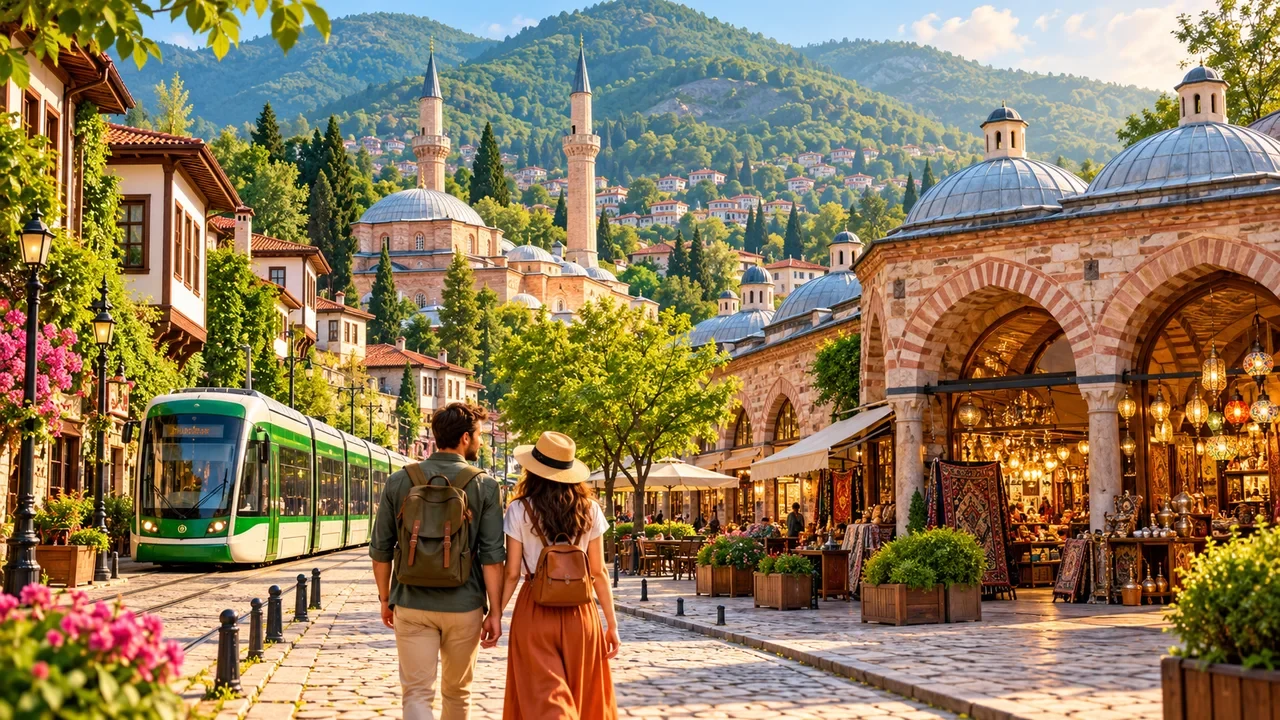
A car-free holiday is not simply a holiday without a rental car. The accommodation has to replace the car: it should put dinner, a useful waterfront or center, basic shopping and at least some transport connections within realistic reach. Get that base wrong and every “cheap” hotel becomes a taxi itinerary.
Start with the evening test
Open the map around a hotel and ask what you can reach at 8 p.m. without arranging transport. Restaurants, a promenade and a market within a comfortable walk are more valuable car-free than being 10 km closer to a famous beach.
İstanbul: public transport is the itinerary
Ferries, rail and metro make a car unnecessary for most visitor itineraries and often preferable. Choose accommodation near the network you will actually use rather than a road-oriented location.
Kaş: compact center, excursions when needed
A central stay allows daily life on foot while boat trips and organized excursions cover experiences farther away. The key is checking the hotel's slope as well as its map distance.
Bozcaada: possible with the right expectations
A town-centered stay can work without a car if you are comfortable using current local transport/taxis for beaches. Verify seasonal options before committing.
Cappadocia: car-free does not mean walk-only
You can stay centrally and combine walking with tours/transfers. Valleys may be walkable from some bases, while underground cities and dispersed sites require another transport solution.
The booking filter I would use
Prioritize centrality, topography, current transport, airport/bus transfer and evening walkability. Then choose the room. Car-free travel works best when logistics are solved before aesthetics.
A practical final check before you book
Open the itinerary one last time and remove one unnecessary transfer. Check current transport, opening hours and weather-sensitive activities close to departure. A strong holiday plan leaves enough structure to avoid logistical surprises and enough empty space for the destination to change your mind.